
Broadcast vs In-Furrow Fertilizer: Which is Better For Your Crop?
As a farmer, you already know the importance of applying the right fertilizer to get the most out of your crop. But you also want to get the most out of your fertilizer investment.
That means choosing the right application method to minimize waste, protect your crop, and improve profitability.
How you place fertilizer can be the difference between overuse and optimization.
Here’s what to know about each of the most common application methods — broadcasting fertilizer vs in-furrow — and when to use each.
What is broadcasting fertilizer?
A broadcast application involves uniformly spreading fertilizer across the soil surface. Farmers use sprayers or spreaders to dispense fertilizer as evenly as possible across large areas of land.
Broadcasting fertilizer is a popular, effective choice for growers with big operations. It’s quick, efficient, and ensures every corner of the field gets even treatment. When you need to cover a lot of ground, broadcasting fertilizer does the job well. Since it’s so efficient, this strategy also reduces the need for extra labor, which helps make it a cost-effective choice.
Still, the broadcast method comes with a few limitations. Thin applications are possible, which can lead to weaker levels of important nutrients like phosphorus. Sometimes, broadcasting fertilizer can also mean less efficient plant uptake in the soil.
What is in-furrow fertilizer application?
In-furrow application means placing starter fertilizer directly into the seed furrow during planting.
With in-furrow application, the goal is to increase nutrient uptake and stimulate early plant growth by making starter fertilizer closer and more available to the seed — right there in the trench.
This method is also sometimes known as either “banding” fertilizer or “pop-up placement.” (The goal is to get seedlings to “pop up” earlier thanks to increased uptake.)
Broadcast vs in-furrow: Which is better for the plant?
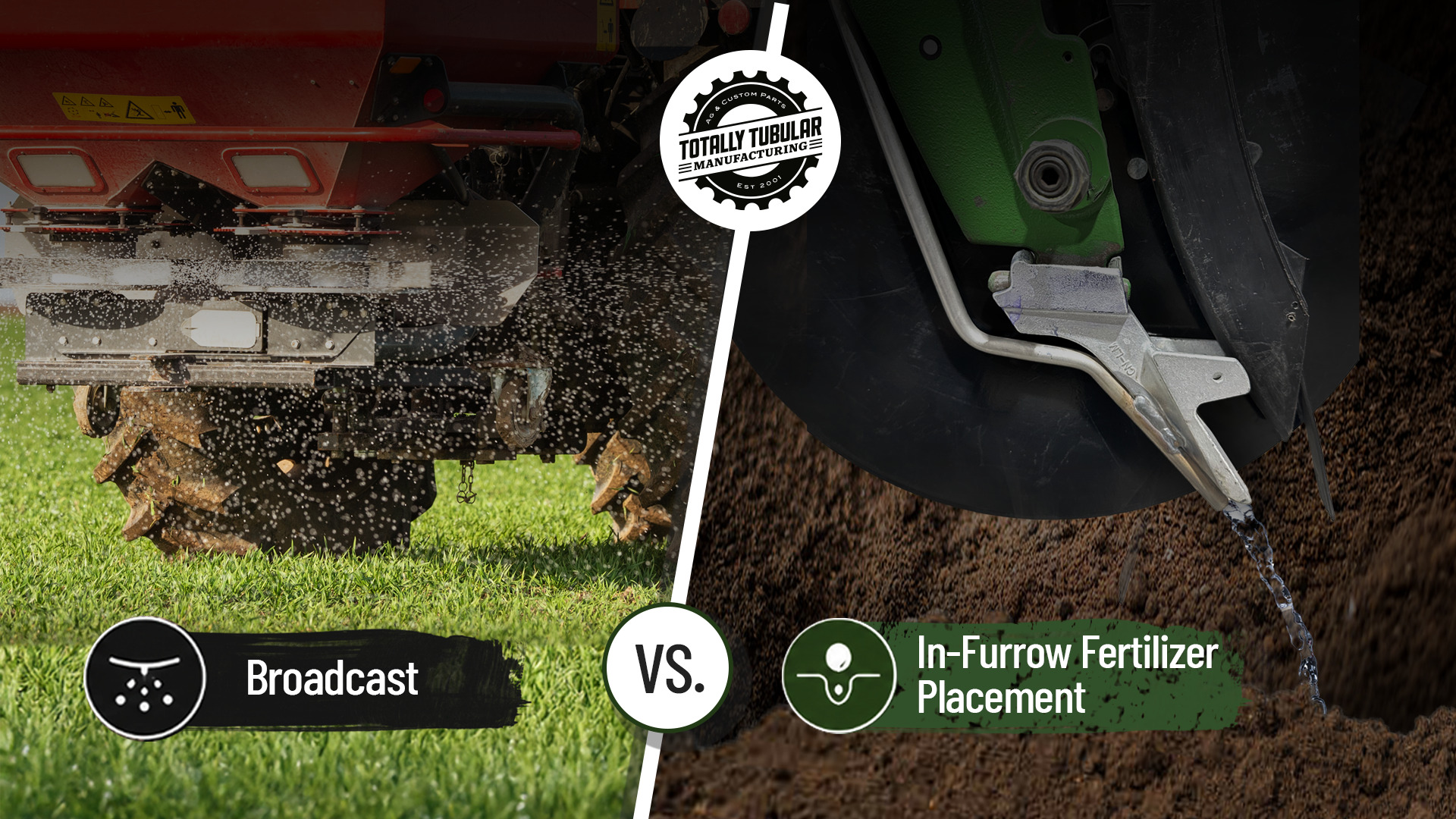
Broadcasting fertilizer is still the most common way to apply fertilizer in the field. It’s quick and ensures uniform spraying across large fields. But is the broadcast method a better option than in-furrow application?
The best choice will depend on the specifics of your operation. Always work with your agronomist to determine the best plan of action based on your situation.
Usually, broadcasting fertilizer is effective for larger, whole-field jobs. However, in-furrow application can be a better choice in two scenarios:
- When you’re using starter fertilizer. Getting starter fertilizer directly to the seed right at the beginning of planting is an efficient way to maximize nutrient uptake and promote early-season plant growth. If starter fertilizer is a part of your plan this season, applying it directly in the seedbed can help you build momentum early.
- When prices are high. Inputs are expensive, and you want to make the most of your investment. In-furrow application can be a way to maximize applications and reduce fertilizer waste.
How in-furrow fertilizer tubes can help your crop get the most from applications
In-furrow application can bring important benefits — both nutritional and financial — to your operation. But you need the right tools to do it.
Totally Tubular’s in-furrow fertilizer tube allows you to apply liquid fertilizer deeper in the soil profile. Field tests show that the tube empowered better plant spacing and bigger harvests (more than 6 bushels/acre increase for October harvest).
If you’re curious about how in-furrow fertilizer application could help you get the most from your input investments, find a Totally Tubular dealer near you.
